By Navonod | Watch the full CNS Spotlight interview
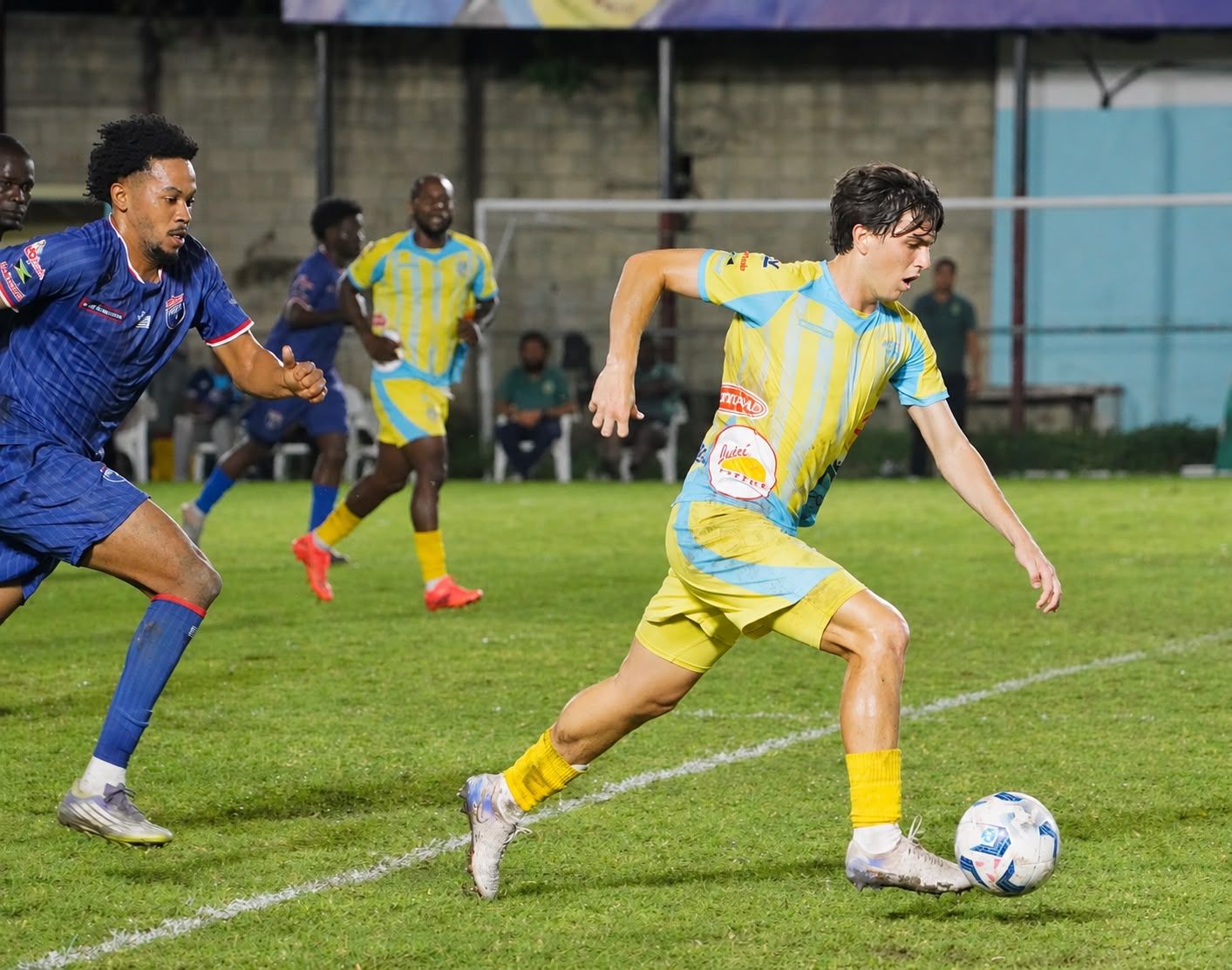
When Bruce Bicknell talks about his son Zander scoring for Waterhouse against Cavalier, he remembers how the goal came. It was a header. He asks his interviewer, Fitzroy Prendagast, whether he saw it. The exchange in the CNS programme Spotlight lasts only a moment, but it captures the pleasure Bicknell takes in watching his son play. For the Chairman of Waterhouse Football Club, there is also a longer history in that moment. Two decades earlier, he stood at the ground where the team trained and saw a dirt pitch with a rope marking the boundary.
Bicknell, the managing director of Tank-Weld Metals, had already seen what a company could do when it put its equipment and people to work in the neighbourhood. He had also seen that example at home. Asked near the end of the interview to name his heroes, he went first to his parents. His father, David, was strict and expected people to get on with the work. His mother was easygoing and generous with her time. Bicknell remembers her counselling young people and says he takes much of his personality from her.
Advertisement


The First Years at Tank-Weld
Bicknell grew up in Kingston, went to school in Jamaica and Canada, and played squash while studying in Canada before graduating from Texas A&M University in 1987. He came straight home. Tank-Weld had begun in 1970 as a small steel fabrication business. Bicknell, his brother Chris and their colleagues were now getting a distribution business off the ground. Bruce remembers loading racks, delivering steel and driving around Jamaica to meet customers. For several years, the business ran in the red. Those trips taught him what customers needed and gave him a chance to hear it from the hardware merchants themselves.
Distribution became the core of Tank-Weld Metals. Bicknell says the company built its approach around keeping stock available, honouring commitments to suppliers and supplying hardware stores without competing with them. He singles out the opening of the Rio Bueno port in 2008 as a turning point, recalling a first shipment of 30,000 tonnes of steel products. The group today describes operations in Kingston, Montego Bay and Rio Bueno, alongside steel manufacturing, heavy equipment, Shacman trucks and solar products. In the interview, Bicknell talks about spare parts and after-sales service with the same attention he gives to landing a shipment. A customer still has to keep that truck working. He sees another opening in supplying solar installers, a trade that has grown as equipment has become more affordable. He speaks of Caribbean exports as a natural extension of the business and names markets including Barbados, Guyana and Saint Lucia.
A Roof, A Football Ground and Jobs
After Hurricane Gilbert in 1988, Bicknell was driving along Olympic Way when he saw that the storm had stripped the roof from Seaward Primary and Junior High School. He took the problem to his father and brother, and Tank-Weld reroofed the school. The principal asked him to chair the school board. Bicknell says he still visits what is now Seaward Primary and Infant School to see the teachers and children. A multipurpose court and paving followed the roof. Work on the football ground at Olympic Gardens, including a stand, fencing and pitch improvements, showed him what a better place to play could mean to a community.
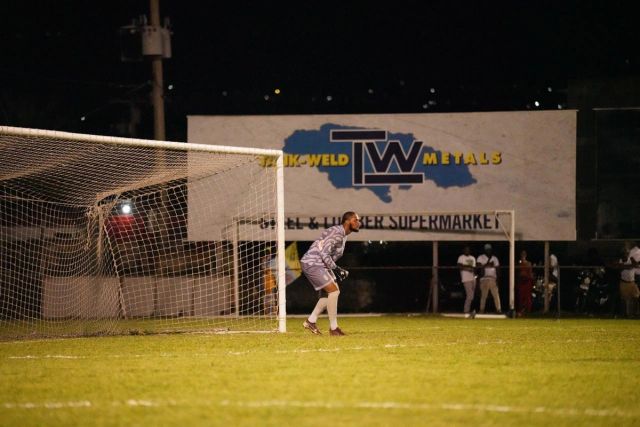
Bicknell recalls that Waterhouse president Donovan White and a group from the club approached him about building a stadium. Waterhouse trained on the dirt at Drewsland and played matches elsewhere. He took the proposal to his colleagues at Tank-Weld, and the project used a design by Omar McGregor. The earlier stadium work at Arnett Gardens gave the group a precedent close to home. Bicknell dates the groundbreaking to February 2003 and the first Premier League match there to October of that year. He remembers seeing fathers and sons come to games together and people from various parts of the community getting to know one another in the stands.
The way the ground was built mattered to him. Bicknell says he met with local leaders and shared the construction work among Waterhouse and nearby communities, including communities around Penwood Road and Samacan. Tank-Weld supervised while residents helped build the stadium. Some of the people who worked on it, he says, went on to jobs with the company as drivers, supervisors, and workers. When he talks about employment today, he also makes room for people who want to work for themselves. A market stall, a barbershop or a small restaurant are among the examples he gives.
A Club with Work to do through the Week
Bicknell describes a football programme stretching from under-10s through under-20s, alongside senior men’s and women’s teams. Each squad needs coaching, equipment and space, and he is frank about what it costs to keep them going. Those age groups give young players a route into the senior game. He still goes to training to see how players and staff are getting on and what they need. When he talks about the club as an employer, he includes the grounds staff and the chef. Much of the work that makes a match possible happens before anyone takes a seat.
The relationship has extended well beyond football. The Jamaica Observer reported that the 2021 Christmas distribution reached residents with 800 care packages, for older people and children. In 2024, The Gleaner covered a back-to-school event in Samacan organised with the Seaward Drive Police Youth Club. Bicknell urged the children to stay engaged at school and to believe that their circumstances need not decide their future. In the interview, he also describes Tank-Weld’s wheelchair programme and its investment in multipurpose courts across Jamaica. The back-to-school event is an example of what those partnerships can do for a household at a time when expenses come all at once.
The Father in the Stands
Zander has represented Jamaica at under-20 level, and his father hopes to see him earn a senior call-up. What Bruce talks about just as readily is how well Zander gets on with his teammates. He follows his son’s studies and speaks proudly about the restaurant Zander runs with friends. He takes similar pride in his eldest son Adrian’s work with the truck business, where sales, parts and servicing all demand attention. The Gleaner has also documented the family joining the Christmas distribution, with sons Blaise and Zander among those who helped. Giving their time in Waterhouse has become something they do together.
Away from work, Bicknell talks about Nicola, their family, his five children and the time he loves spending with his grandchildren. When Prendagast asks if he spoils them, he answers yes without hesitation. He wants his children to work hard and make their own way. He also makes it clear how much he enjoys being around them, whether the conversation turns to a business they are finding their feet in, a grandchild he gets to spend time with or a goal he can describe from memory.
Asked what he still wants to achieve, Bicknell speaks about finding happiness and sharing it with other people. A visit to Seaward, a conversation with a prospective shopkeeper and a night watching Waterhouse give that answer a local address. At Drewsland, the ground the community helped build is now where he gets to take his place in the crowd and watch his son play.
Interview credit. Fitzroy Prendagast of CNS conducted the Spotlight interview on which this article is based. Watch on Frame.io.